
The Difference Between Getting Leads and Getting Good Leads
In digital marketing, generating leads is often seen as a sign of success. More enquiries, more form submissions, and more potential customers can indicate that a campaign is reaching its audience. However, a high number of leads does not always translate into higher sales. The real challenge is not just attracting people who show interest in a product or service. It is identifying prospects who have a genuine need, the intent to make a purchase, and the potential to become paying customers. This is where the difference between getting leads and getting good leads becomes important. While lead generation focuses on attracting potential customers, quality lead generation focuses on attracting the right people who are more likely to convert.
What Is Lead Generation?
Lead generation is the process of attracting potential customers and encouraging them to share their contact information or express interest in a business's products or services. Businesses use multiple channels for lead generation, including search engine marketing, social media advertising, content marketing, landing pages, email campaigns, and other digital marketing activities. The objective is to build a pipeline of potential customers who can be nurtured through the sales journey. However, not every person who clicks on an advertisement or fills out a form is ready to buy. Some may be exploring their options, some may be looking for information, while others may not fit the business's target audience at all. This is why lead generation should not be measured by numbers alone. The relevance and intent of the people entering the sales pipeline matter just as much.
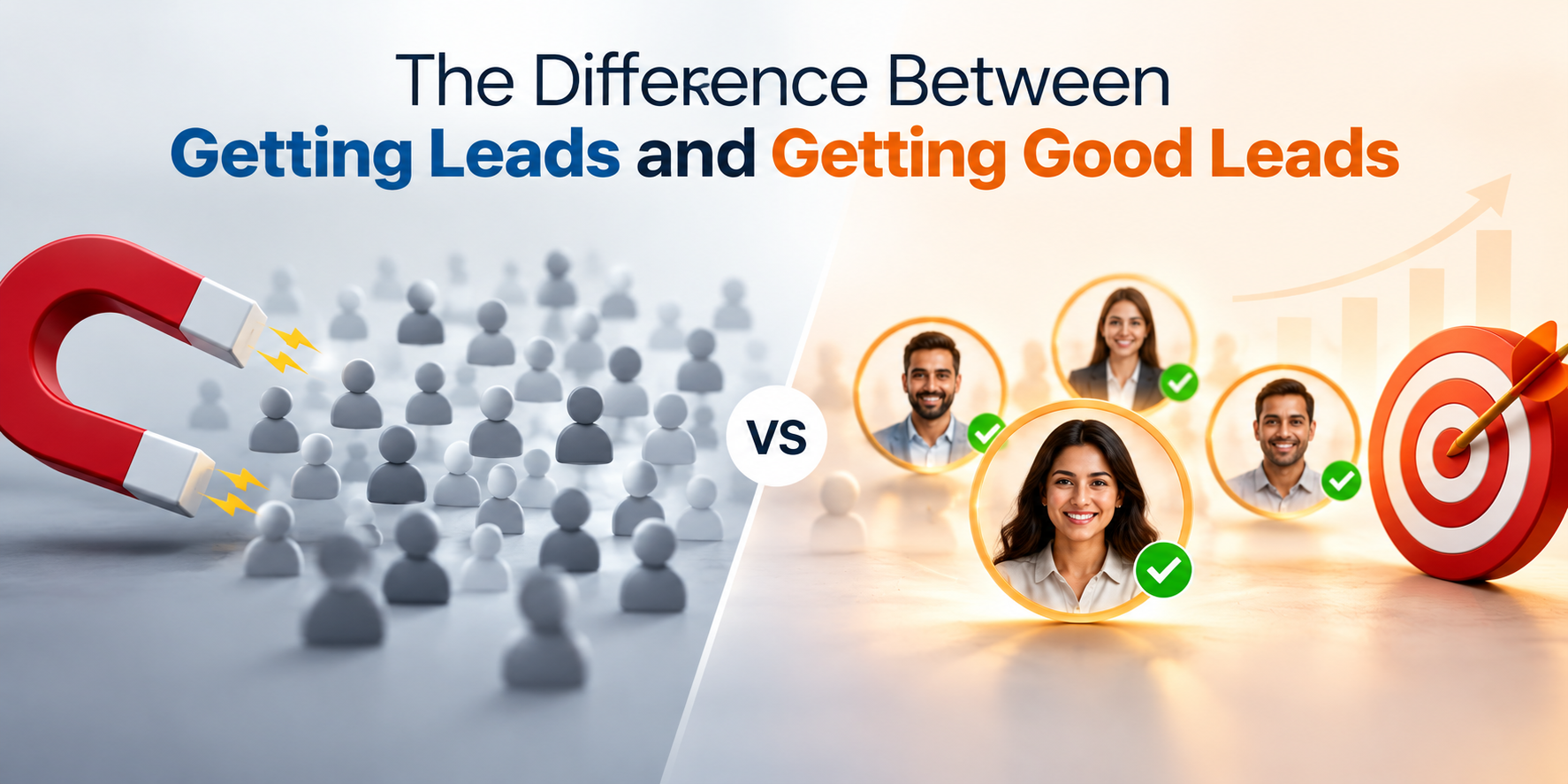
Getting Leads vs. Getting Good Leads: What Is the Difference?
The difference lies in the quality, relevance, and purchase intent of the prospects a business attracts.
Getting Leads:
● Focuses primarily on generating enquiries and collecting contact details.
● Measures campaign performance through metrics such as clicks, form submissions, and cost per lead.
● May attract a broad audience, including people who are not ready to purchase.
● Can increase the workload for sales teams if leads are poorly matched to the offering.
Getting Good Leads:
● Focuses on reaching people who match the business's target audience.
● Considers factors such as genuine interest, budget, requirements, and purchase intent.
● Prioritises qualified leads that have a higher potential to convert.
● Helps sales teams spend more time engaging with relevant prospects.
For example, a business may receive 500 leads from a campaign, but if only 20 are genuinely interested in its services, the campaign may not deliver the expected business results. Another campaign generating 100 leads could prove more effective if 40 of those prospects are relevant and ready for a sales conversation. The goal is not necessarily to generate fewer leads. It is to improve the proportion of leads that have a genuine chance of becoming customers.
Why Quality Leads Matter More Than Lead Volume
Lead volume can provide useful insights into campaign reach and audience interest. However, quality leads offer a clearer indication of whether marketing efforts are attracting the right prospects. Here is why businesses should prioritise lead quality.
1. Better Lead Conversion
When prospects understand the offering, have a relevant requirement, and are interested in taking the next step, sales conversations become more meaningful. A well-qualified prospect is generally more likely to progress through the sales funnel than someone who has submitted an enquiry without any genuine purchase intent. This can improve lead conversion and help businesses make better use of their marketing investments.
2. More Efficient Use of Marketing Budgets
Generating a large number of leads may appear cost-effective when the cost per lead is low. However, if most of those leads never convert, the actual cost of acquiring a customer can be considerably higher. Focusing on qualified prospects helps businesses evaluate campaign performance beyond the initial cost of acquiring an enquiry.
3. Less Pressure on Sales Teams
Sales teams need time to understand customer requirements, explain solutions, and build relationships. When marketing campaigns generate irrelevant or unresponsive enquiries, sales representatives spend valuable time following up with prospects who may never convert. Better lead quality helps create a more focused sales pipeline and allows teams to prioritise opportunities with stronger potential.
4. Stronger Return on Marketing Investment
The ultimate objective of marketing is to support business growth. By attracting prospects who are more likely to purchase, businesses can improve the connection between marketing activities and actual revenue outcomes. This makes quality lead generation an important part of a performance-driven marketing strategy.
What Makes a Lead a Qualified Lead?
A qualified lead is a prospect who meets specific criteria that indicate a reasonable potential to become a customer. These criteria vary depending on the business model, industry, product, and sales process.
Some of the most important indicators include:
Target Audience Fit: The prospect belongs to the audience the business wants to reach, based on relevant characteristics such as industry, location, business size, or customer needs.
Genuine Requirement: The prospect has a problem to solve or a requirement that aligns with the product or service being offered.
Budget Compatibility: The prospect has a realistic budget or the financial capacity to consider the offering, where relevant.
Purchase Intent: The prospect is actively exploring a solution, requesting pricing, booking a consultation, or demonstrating other meaningful buying signals.
Readiness to Engage: The prospect is willing to respond, discuss requirements, or move towards the next step in the buying process.
Not every lead needs to meet all these criteria immediately. Some prospects may require further nurturing before they are ready to purchase. The key is to identify where each prospect stands and respond accordingly.
How to Generate Quality Leads for Your Business
Effective lead generation requires more than increasing advertising spend or expanding campaign reach. It involves aligning audience targeting, messaging, conversion journeys, and sales follow-ups with business objectives.
1. Define Your Ideal Customer Profile
Before launching a campaign, businesses should clearly identify who they want to attract. Understanding the ideal customer's needs, challenges, decision-making process, budget, and purchase behaviour helps marketers create more relevant campaigns. It also reduces the likelihood of attracting enquiries from audiences that are unlikely to convert.
2. Focus on Audience Targeting
Broad targeting can increase reach, but it may also attract people who have little interest in the actual offering. Using relevant audience segments, search intent, location filters, demographic information, and behavioural signals can help campaigns reach prospects who are more likely to be interested in the product or service. The right targeting approach depends on the industry, platform, and campaign objective.
3. Create Relevant Ad Copy and Landing Pages
Marketing messages should clearly communicate what the business offers, who it is for, and what value customers can expect. A landing page should continue the same message as the advertisement, provide essential information, and make the next step clear. Accurate messaging and transparent expectations can discourage irrelevant enquiries while encouraging suitable prospects to take action.
4. Use Lead Qualification Methods
Lead qualification can begin with simple form fields that capture relevant information about a prospect's requirements, business, budget, or timeline. For businesses with longer sales cycles, lead scoring can also help prioritise prospects based on their profile, engagement, and buying signals.These methods allow marketing and sales teams to distinguish between initial interest and stronger purchase intent.
5. Align Marketing and Sales Teams
Marketing teams understand campaign performance and audience behaviour, while sales teams have direct insights into prospect quality and objections. Sharing feedback between both teams helps identify which campaigns generate meaningful enquiries, which audience segments convert, and where prospects drop out of the sales process. This alignment makes lead generation more effective over time.
6. Track Metrics Beyond Cost Per Lead
Cost per lead is useful, but it does not tell the complete story. Businesses should also track qualified lead rate, cost per qualified lead, lead-to-customer conversion rate, customer acquisition cost, and revenue generated by campaigns. These metrics provide a more complete view of whether marketing activities are delivering commercially valuable results.
The Role of Performance Marketing in Quality Lead Generation
Performance marketing allows businesses to measure campaign outcomes and optimise their strategies using real data. When applied to lead generation, it helps marketers understand which channels, audiences, advertisements, and landing pages are generating the most relevant prospects. Instead of optimising campaigns solely for clicks or form submissions, marketers can use downstream sales data to identify patterns in lead quality and conversion. For example, if one advertising campaign generates a lower cost per lead but very few sales-qualified prospects, while another attracts fewer but more relevant enquiries, the second campaign may offer better business value. Integrating lead quality and conversion data into campaign optimisation can help businesses make more informed budget decisions and improve the effectiveness of their marketing efforts.
How Lead Generation Services Can Help
Professional lead generation services can help businesses develop a structured approach to attracting, evaluating, and nurturing potential customers. Depending on the business's requirements, these services may include audience research, campaign strategy, paid advertising, landing page optimisation, lead qualification, conversion tracking, and performance analysis. A well-planned strategy connects these activities instead of treating lead generation as an isolated campaign objective. It also creates opportunities to refine targeting and messaging based on the quality of enquiries and feedback from the sales team. The right approach should be tailored to the business's industry, sales cycle, customer acquisition goals, and available resources. The objective is to build a more relevant pipeline of prospects and create better opportunities for sustainable growth.
Conclusion
Getting leads is an important first step in growing a business, but getting good leads is what makes lead generation more meaningful from a business perspective. When campaigns focus on audience relevance, genuine purchase intent, lead qualification, and conversion outcomes, businesses can make better use of their marketing budgets and sales resources. At Substance Communication, a strategic approach to digital marketing focuses on connecting campaign performance with business objectives. By looking beyond lead volume and paying closer attention to lead quality, businesses can work towards building stronger sales pipelines and achieving more measurable growth. Looking to make your lead generation efforts more effective? A strategy built around the right audience, relevant messaging, and meaningful performance metrics can help turn marketing enquiries into valuable business opportunities.